This is a blog dedicated to the Marketing of Healthcare Services. I welcome comments and feedback.

Blog Search

Anas' Weblog

Showing posts with label Max Hospital. Show all posts

Wednesday, March 3, 2010

The Afghans at Max Healthcare

I have been in and out of the Max Hospital in Saket the last week, mainly on account of my grandmother who is admitted in the hospital’s medical ICU, trying to beat a tough infection and the kidney failure it has brought on. My grandmother is over a 100 years old and is a fighter to the core. At her age, we know her prognosis is grim, however she is not giving in-not just yet at any rate.

As I spent time in the hospital, I could not help but notice the Afghans flooding the hospital. The tall and strapping Afghans, many in their traditional dresses are easily recognisable. Seeing so many of them using the hospital now, sent me back 5 years down the memory lane, when we had first looked at Afghanistan as a possible business opportunity.

Ashmeena Ghei, had just taken over as the Head of International Sales and I headed Marcom as well as domestic sales with in India. Dr. Praveen Chandra had joined the interventional cardiology team and was keen to taking a medical team to Kabul. In his earlier assignment at the Escorts Heart Institute, Dr. Chandra had successfully organised many such camps. Between him and Ashmeena, we assembled the team for Kabul. Ashmeena went earlier to set up everything, the team’s stay arrangements, local hospital tie ups, publicity for the medical camp, permissions from local authorities et al. I arranged all the publicity material-getting posters and banners in Dari was a tough ask, but we got everything organised and sent to Kabul by the Indian Airlines flight, only to discover errors in camp dates!!!. I had no way of understanding what dates have been printed in the Dari script and these were discovered when our material reached Kabul. Panic hit the Delhi team and we worked overnight to correct the mistakes and resend everything.

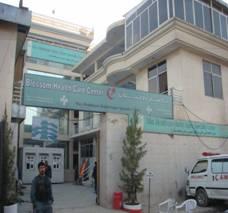
Dr. Chandra and his team’s visit was hugely successful. They treated scores of local people and generated tremendous goodwill for the hospital. We had them on the local Tolo TV station and the local press covered the camp. Ashmeena also roped in the general sales agent of Indian Airlines based in Kabul as the local Max Healthcare representative. His office was right opposite the Indian embassy in Nowshar area of the city and this proved hugely beneficial as patients planning to travel to India could get their visas at the embassy, walk across the road to purchase their tickets and also get information about Max Hospitals. The office was inaugurated with much fanfare with new Max signboards being put up in English and Dari. We also forged a referral tie up with the local Blossoms Hospital. This was to be used for regular referrals to Max Hospitals in Delhi.

That began a small trickle of patients from Kabul. Subsequently when Ashmeena moved on, I took over from her as the Head of International business at Max Healthcare. The traffic from Afghanistan continued to grow, we appointed a few agents in Delhi who regularly brought in their patients, hired local Afghans as translators and continued sending medical teams to Kabul frequently. My successors at Max have done a fantastic job of extending the Afghan connection so much so that in December last year when my father was hospitalised in Max for prostate surgery, I received a call from the hospital’s international desk, with someone trying to hold a conversation with me in Dari!!!. Going by our Muslim name, the desk had simply assumed that my father must be another Afghan patient admitted in the hospital.

Sitting quietly in the hospital cafeteria I could not help but watch with pride the multi-hued, multilingual and truly international set of patients using the hospital’s services. The preponderance of the Afghans in this mix made me wonder that the seed that was planted so many years ago has grown into a big tree.

Wednesday, August 26, 2009

The Hindustan Times and the Hospitals in Delhi


HT Report 1The whole of the last week The Hindustan Times carried a series of stories highlighting incidents of 'negligence' in high profile private hospitals in Delhi. The hospitals featured included Fortis Escorts Hospital, Max Hospitals, Apollo Hospital, Sir Gangaram Hospital and Rajiv Gandhi Cancer Hospital. Now these hospitals in Delhi are the best that we have. While, Hindustan Times has a right to expose cases of negligence in hospitals I am still not sure what purpose was served by these reports.

Here are a couple of points I would like to make about these 'exposes'.

The cases reported highlighted horrific experiences consumers had in these hospitals. Most people featured in the story lost a loved one because the hospital failed to deliver adequate care and refused to take responsibility for what went wrong. These I am afraid were random cases picked up by intrepid journalists and made for riveting reading. However, the journalists doing these stories did not investigate the reason for these failures. The question why did these hospitals fail in their duty towards their patients remains unanswered. Was the failure a result of a doctor not discharging his duties properly, or was it a failure of the hospitals processes or both? Or was it negligence or an error of judgement on the part of a doctor? Did he deliberately mistreat a patient, was callous in discharging his duties, wilfully deviated from standard medical practices or just did not care enough?

The reports also did not establish a trend. By picking up five hospitals in the city and highlighting these horrific cases, I am not too sure the point that the newspaper has made. Are all these hospitals equally bad? Do we run a huge risk to life and limb if we trust these hospitals with our care? The stories were short on data. For example the story featuring the eminent cardiologist Dr. Ashok Seth, presently the Chairman of the cardiac program at Fortis did not establish how many times has he messed up an angioplasty. By highlighting a single botched up case amongst the thousands that Dr. Seth does every year, I believe the journalist has been less than fair to him. I would like to know Dr. Seth's success rate in deciding whether I trust him or not rather than go by a sensational story of an angioplasty and the subsequent care going haywire.

As consumers we must understand an ugly truth. There is no running away from the fact that cases of utter negligence and mind boggling errors are a part and parcel of life in a hospital. Even the best hospitals, will have some people who would take their work casually, be negligent in their duties and cause terrible suffering and yes loss of life because of their actions. At best a hospital can try to minimise these as best as it can. It can systematically identify such people and eliminate them, it can put in place systems and processes, which allow it to act before the damage is done. However, it is next to impossible to completely do away with error and negligence.

I just do not understand what point has been established by The Hindustan Times in doing these stories. Yes, it establishes the fact that some of our best hospitals in Delhi have been at times negligent in the discharge of their duties causing untold suffering to people, who trusted these hospitals.

But isn't it something that all of us know and isn't that true of all the hospitals in the world?

Wouldn't it make more sense if the newspaper clearly established a trend of deficient care  in one or all of these hospitals over a period of time and compare the hospital's record with that of other similar hospitals across the world. It would than stand to reason for citizens to avoid the hospital and for the management of the hospital to fix its people and systems.

Sunday, April 19, 2009

Pricing Healthcare Services

The pricing of services in a hospital is perhaps one of the most complex and difficult exercise undertaken by the hospital managers. Pricing is  usually a Marketing function in most industries and the final call would usually rest with the Marketing chief. However, in hospitals this seldom happens. Pricing issues are generally discussed and debated in the executive committees and the leadership teams, views are sought from senior medical leaders and usually a consensus is arrived at. l,

Many hospitals follow a ‘market based’ pricing model, which simply means they comb through the pricing policies of their competitors, get pricing data from various labs and other diagnostic centres through their referral sales teams and establish their pricing either basis a premium or a discount from their chosen competitors.

Very few hospitals have a ‘cost plus’ pricing system. Developing an accurate costing of all medical procedures is next to impossible. This is simply because the medical consumables used vary from doctor to doctor and also depend on the complexity, age and general condition of the patient. The cost is also invariably a function of the training and competence of the concerned doctors and medical staff attending on the patient. Thus the cost of a bypass surgery may vary dramatically depending on the condition of the patient, the competence of the surgeon and his team and co-morbidities like diabetes.

The calculation of a price is usually based on a ’surgeon’s fee’. On top of this is added the cost of anaesthetic gases, the anesthetist’s fee, an OT fee and OT consumables. The surgeon’s fee is usually checked with the hospital’s surgeons and if it is Rs. X, the fee for surgery inclusive of gases, anaesthetist’s fee and the OT charges usually adds up to Rs. 2X. 

The patient on top of this is charged room rent depending on his choice of the hospital room, the cost of medicines and room/ward consumables and all diagnostics. The hospital also charges exorbitant consultant’s visiting fee every time he/she visits a patient in the hospital. (Some hospitals like Artemis cap this to a maximum of two chargeable visits). Strangely all hospitals charge a premium on all services if a patient chooses a single or higher category rooms. This simply means that if one opts for a single room one pays higher for everything, the surgeons fee, the cost of surgery and diagnostic tests. Most people do not know this and believe that the hospitals charge a premium only on room rent. Many would consider this a pernicious practice simply because a surgeon’s skill and time, which are the determinants of his fee has nothing to do with the room category a patient is in.  

Some hospitals like Max Hospitals create price bands for surgeries based on their complexity and average duration. Thus all surgeries in a particular band has the same basic surgeon’s fee. On top of it is added everything else.

Healthcare Pricing in India is still very unscientific and subjective. This is a far cry from the pricing models prevalent in the US, where ICD and other scientifically designed parameters help assess the cost of a procedure and patient billing. Health Insurance companies have been able to push through accurate and scientific billing procedures.

The need for a better system for patient billing in hospitals is acute. The government must establish a regulatory body to help fix the basic billing rules for all hospitals. The hospitals should than be allowed to price themselves as they wish keeping in mind their expenses etc. I would reckon once insurance companies gain prominence as payors, they would start dictating their terms to the hospitals.

And that would be a different story altogether.

Monday, February 23, 2009

Hospitals and Hotels

Yesterday I came across a piece in The Hindustan Times, which talked about the 'luxury' that a hospital now offers. The piece had snaps of fancy chefs offering a choice of cuisine to patients, nurses 'requesting' young patients, mostly kids to have their medication and the smiling front office staff making 'guests' welcome.

This made me remember my grandmother, who is all of 104 years old narrating to me her escapades in hospitals run by the British in colonial India. She had great admiration for the no nonsense English doctors, the stern nurses, who followed orders and paid little attention to patient grievances. She remembers these episodes with a mixture of nostalgia and respect for the efficiency that this system stood for. The food was always what the doctor ordered, the medicines were given like clockwork and chores like sponging were a must-the patient had little choice in the matter.

In today's age of the service economy, the patient has become a guest (air passengers too have become guests) to be treated and pampered. Hospitals try their best to provide a luxurious stay, with patients allowed to exercise choice in almost everything except perhaps medical treatment.

While this is great for patients and their attendants, to compare a hospital with a hotel is futile. No one except crooks wishing to evade imminent arrest go to a hospital of their own volition. Illnesses, which drive people to hospitals are universally considered a period of misfortune. Howsoever luxurious the hospital might be, one still wishes to recover and step out of it as soon as possible. The fact is that I am yet to meet anyone, who really wishes to spend  a few nights in the luxury of a 5 star hospital!

The unfortunate part is that a story, which highlights these peripheral services in a hospital tends to trivialise the core services of the hospital, which essentially revolve around medical care. Somehow the patients feel that these hospitals have little substance and a lot of style, which amounts to very little. This perception though (in many cases) unjustified is usually strong and hard to shake off.

The hospitals featured in this story included Indraprastha Apollo Hospitals and Max Hospitals amongst others. As the head of marketing communications of any of these hospitals, I would be very wary of  a story like this.

I have nothing against hospitals treating patients as guests. However, they must remember that talking too much about these is never a good idea. It would be a lot better for customers to spread the word around, about the great experience they had in the hospital. 

It would really serve the hospital a lot better.