This is a blog dedicated to the Marketing of Healthcare Services. I welcome comments and feedback.

Blog Search

Anas' Weblog

Showing posts with label Hospital. Show all posts

Saturday, December 4, 2010

The Healthcare Marketer’s Life


Yesterday evening while I was returning from work a friend called. He has recently taken over as the Head of Marketing Communications at an upcoming hospital. I had met him a few weeks ago to congratulate him on his new assignment and he seemed quite kicked about his new role. He had grand plans of changing the way the hospital communicated with its patients and other stakeholders, he wanted to run customer facing programs, drive relationships with patients through effective engagement and deliver uniformly great experiences to those who touched the hospital.

Yesterday over the phone Ajay felt he had made a big mistake by joining the hospital. I was quite flummoxed by this turn-around. Further inquiries revealed a familiar story. The hospital has a brand new CEO, someone who has worked for many years in hospital operations but have no knowledge or appreciation of communication. However, like most folks he too believes that marketing communications is hardly something to be left to experts. In fact the CEO believes that he knows exactly how a piece of advertising or a brochure should look like. Download the text from the web, adapt it by rewriting some of it, slap a few images downloaded from the net and include the mandatory images of some if the hospital doctors, run it past a few senior hospital bigwigs and, voila the ad or the brochure is ready. As far as hospital signage are concerned, the CEO feels that they really are meant to provide legible directions to the patients and fussing over them, their aesthetics and design is a gross waste of time, energy and money. Well I might be exaggerating a little here but this is really the long and short of what Ajay felt his CEO was doing and no wonder he had started feeling frustrated in the set up.

Marketing folks in hospitals always grapple with the problem of every one who is anyone coming up and advising them on how to create a piece of communication. Some doctors love to see their pictures in the ads and some other feel great if gory images of them operating heroically could be included in the communication. The CEO’s love to mutilate the advertising copy, insist on correcting perfectly well written text, increasing or decreasing the font and of course having the logo bigger, bolder and always 2mm to the right! Many a times the marketing communication executive has to sweat many hours trying to accommodate the conflicting wishes of the CEO, the star surgeon and his favourite flunky. All in a day’s work for the intrepid marketing guy, who can be forgiven for wondering if he is the only one who knows nothing about marketing communications.

Those who have worked in hospitals long enough know how to maintain a fine balance. They will wait till the last-minute, before asking a doctor to go through the text and approve the ad, they will sneak it past a doctor who they know is not too interested in the brochure’s finer details, they will get the mailer made and when a livid doctor would approach them on their failure to show it to him, they will deftly show an e-mail sent a few days ago knowing fully well that the doctor rarely checked the mail. Tricks of the trade, which one learns on the job.

Well, while all this may sound hilarious, the fact is that a hospital marketer’s life is not easy. If the hospital is doing well, his budgets are the first to be cut (why do we need to spend money on advertising, we have hardly a bed to spare!) and God forbid, if the hospital is not doing too well, the marketer knows that the hospital can hardly spare cash to blow its own trumpet. The doctors and particularly who head various departments are always after his life to see their ads in the newspapers, whether the marketer has the budget for such advertising is of course none of their concern. The CEO is always looking to pinch a few more pennies from a meager budget and he insists on stretching the money to impossible levels.

Such is than the life of a healthcare marketer.

Usually, in all this the silver lining is a boss, who understands the inner dynamics of the hospital, who knows how to work with medical folks without unnecessary confrontations, who lets the marketing guy go about his job without much hindrance and steps in to resolve conflict as it arises. He is the one who understands the aspirations of a good marketer as well as the concerns of the medical folks in the hospital and strives to achieve a balance.

At the end of the day, and in like most other things in life, a fine balance is the key.

Saturday, September 4, 2010

The Perils of Standardized Health Care


Can healthcare delivery be standardised? This is the question, which has been bothering me this week.

The thought itself was triggered by a report in ‘Mint’ earlier this week titled ‘Government plans common healthcare standards’. (http://www.livemint.com/2010/08/24233218/Govt-plans-common-healthcare-s.html)

While the report portrays the benefits of standardization of care with millions of patients receiving standard care prescribed by the government thus saving them from being shortchanged by unscrupulous doctors and mercenary hospitals, there is also a flip (and a more real) side of the argument that we must understand.

While the government pushes through the Healthcare Standardization agenda, one wonders how can the delivery of healthcare be standardized across all medical facilities in the country? Every individual is different, reacts differently to treatments, the doctors are required to take decisions based on their experience and training and not on the basis of a set of guidelines decided upon by the government. If I was to fall sick, I would want my doctor to treat me based on his knowledge and experience and do what he feels is the best for me rather than stick to a standard set of guidelines mandated by the government. All doctors and medical establishment should have one guiding principle – the interest of the patient must be supreme and if there is a situation of uncertainty, I would want my doctor/hospital to always err on the side of caution.

Also, the healthcare delivery model in the country is hugely diversified. In its current form with poor regulation and monitoring it just does not lend itself to any standardization of care.The government-run tertiary care hospitals in large cities are filthy and over-crowded with patients and over-worked and under-paid doctors. The government run district hospitals as well as Primary Health Centres are even worse off with out dated equipment, poorly trained doctors, who often do not even show up for work. The private healthcare is dominated by secondary care establishments (usually called nursing homes), which have 10-50 beds and are usually owned by a doctor or a group of doctors. These are mostly mom and pop establishments, where owner doctors reign supreme and are answerable to none. Quality of care in these establishment is of dubious standard and these are neither properly regulated nor monitored vis-a-vis outcomes or treatment protocols. Christian missionaries and other charitable institution also run a large number of hospitals and now we have a nascent category of corporate style hospitals coming up in large cities offering cutting edge care. My point-all these hospitals are differently equipped, have differing goals (for profit, non-profit, govt. owned etc.), have vastly different resources at their disposal, have different cultures and widely varying medical expertise available to each of them. How on earth can they all provide standardised, similar quality care to their patients?

Last December my father underwent a prostate surgery in a hospital in Delhi. Elderly men usually require this surgery at some point in time in their lives. Now, while I researched the treatment options for him and took surgeon’s opinions I discovered that we had several options. Our surgeon felt that the best and the safest alternative for him would be a laser surgery involving a cutting edge holmium laser. Now, this option is not available at most of the hospitals even in a city like Delhi, thus it can safely be ruled out from the ‘standardised treatment guidelines’ that are being framed by the government. In a situation like this, will it mean that patients like my father will be denied this option and he will have to endure the conventional surgery with its attendant risks of infection, excessive bleeding and a much longer hospital stay?

Let us now also look at the genesis of all this.

The health insurance companies (mostly state-owned) want treatment protocols for some common diseases to be standardised so that they can fix a rate for these procedures, irrespective of the hospital and the doctor one chooses to go to. For the insurance companies this will lead to a state of nirvana, as they would be required to pay a fixed lump sum to the hospitals irrespective of the bill a patient runs up. They can then squeeze the hospitals further and make greater profits. Now, I am not against profits, however the problems that I see in this arrangement is that the patient will suffer, the quality of care will go down as hospitals will try to manage the delivery of care with in the financial limits set by the insurance companies (after-all they also need to be profitable). This is clearly hazardous.

One buys a health insurance cover to ensure that in the time of need, financial constraints do not come in the way of accessing the optimum quality healthcare. The operative words here are ‘optimum quality’ and not ‘standard quality’ as mandated by the government. To equate these two will be a great folly. If the insurance companies believe certain hospitals are taking advantage of the situation by excessive billing (which I submit happens), they must put in place strict monitoring mechanisms including peer group reviews of treatment provided by the hospital. A healthcare regulator needs to be set up by the government to arbitrate between insurance companies and the hospitals. The regulator can possibly frame broad treatment guidelines, which can serve as references in case a dispute arises between a patient, the hospital and the insurer.

Standardizing treatment protocols in a healthcare environment as complicated and as unregulated as ours is a dangerous and mostly an impractical idea. We need to first standardize our healthcare delivery systems before even thinking about standardizing treatment protocols. Paying hospitals based on these standardized treatment protocols because it makes health insurance companies profitable is inviting hospitals to cut corners. Once this happens, it will lead to serious erosion in the quality of care and even more importantly a big trust deficit between patients and hospitals will emerge.

That would really be the ultimate irony, for if a patient does not trust his doctor or hospital, he really would have nowhere to go.

Sunday, February 7, 2010

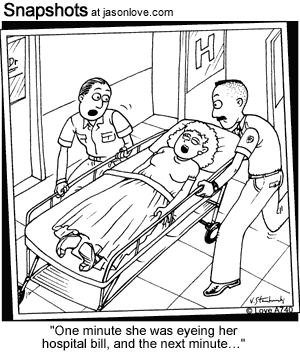
Hospital Pricing Must be More Transparent

Most people in India are scared of hospitals, more for the unpredictable financial implications that hospitalisation engenders than anything else. While most folks stoically accept the medical outcome, many find accepting the hospital bill far more difficult. This should not be the case.

Hospital pricing in India continues to be shrouded in mystery and one pays pretty much whatever the hospital asks. Most people do not even have elementary knowledge about how the hospital charges. At the time of admission, the hospitals proffer an estimate of expenses for what they assume would be an uneventful stay in the hospital. The patients expect that the hospital bill would be around the indicated estimate and plan accordingly. They do not realise that a hospital estimate has a large number of variables, which can often lead to a higher bill and what the hospital is indicating is the best case scenario and what they need to be prepared for is perhaps the worst case scenario.

While there are often legitimate instances where one can understand the initial estimate going haywire, sadly their are also cases where the hospitals deliberately mislead the patient to make a fast buck. When my mother underwent a bypass surgery, she also contracted a serious chest infection and we had a very difficult time. The hospital did its best to see her through and the expenses mounted. However, in this instance since I was aware of the risk of infection, and had decided to go ahead with the surgery, paying more did not bother me and I certainly never felt that the hospital had cheated us.

While a few good, well established hospitals do not try to ‘reel in’ patients by indicating a lower than expected expense at the time the patient is making up his mind about the hospital, many unfortunately deliberately mislead the patient. This is a pernicious practice and actually amounts to taking undue advantage of the patient. Some hospitals also quote a higher price if a patient has an insurance cover and a much lower one if they are paying on their own. This is unfortunate and self defeating as insurance companies will soon start tightening the screws and once they have sufficient strength, they will drive a very hard bargain, which will have the hospitals cutting corners and the hapless patients paying the price literally and figuratively.

In the mad scramble for patients, hospitals have also started bargaining. As the patient walks in the hospital, the executives will discuss the likely expenses and if they find that the patient is likely to go ’shopping’ to other hospitals, will make an instant offer much lower than quoted initially. This is largely to entice the patient to choose their hospital. It works well as the patient is spared the hassle of going to other hospitals and he believes he has got a bargain. What he does not know is that at that price the hospital is likely to compromise on consumables like implants, which may later on have serious medical consequences. I remember a few years ago we had a patient at Artemis Hospital from Bangladesh for a cardiac valve replacement surgery, for which the hospital had quoted an estimate and explained to the patient in detail the implants it proposed to use and all the other associated costs. The patient went shopping and landed at another hospital in Delhi, where he was quoted a price roughly 50% of what we had quoted. He had no idea of the quality of the implant proposed by this hospital but felt he could trust the doctor and the hospital (in that order). He went ahead with the surgery not knowing that he would probably require corrective surgery in a few years, which would be a lot more expensive and riskier.

The answer to all this madness lies in a better educated customer and more hospitals with a conscience. Hospitals must spend in educating customers about the likely costs, the risk factors, which can push the costs up and explain the possible consequences of choosing a cheaper, though a sub optimal treatment option. Transparency and honest intent are the key to winning a patient’s confidence. And of course they should be driven by a motive, which is more than profits at all costs.

Pic courtesy http://content.bored.com/comics/snap01636.gif

Thursday, January 14, 2010

The Silly Question of RoI in Healthcare Marketing


The other day I was with Dr. Jadhav who heads the Marketing function at the well known Narayan Hrudayalaya in Bangalore. Dr. Jadhav was keen to use radio for his hospital’s communication needs and I was hoping to persuade him to advertise with Fever 104, the radio station owned by The Hindustan Times, my current employers. Narayan Hrudayalaya, which is a well-known cardiac hospital thanks to the famous Dr. Devi Shetty and his pioneering initiatives, has recently started a Cancer Centre as well as a Multi Speciality hospital and wanted to promote these. The aim of the communication was to tell the citizens of Bangalore about these services available at Narayan Hrudayalaya and to drive ‘footfalls’.

While I discussed the plans with Dr. Jadhav, I could not help but notice his concern about the RoI on his marketing spends. Dr. Jadhav was very clear that if he spent Rs. 100, he needed 3 times the sum in revenue, which could be directly attributed to this activity. I could easily relate to this because this is exactly the kind of expectations the management teams had of me, when I headed the Marketing function at Max Healthcare and Artemis Health Institute.

I wish calculating RoI on healthcare spends was this easy. While there are many websites, which help one calculate RoI on marketing spends using complex formulae and spreadsheets involving the lifetime value of a customer, the cost of capital and what have you, I believe quite often the best way forward is a subjective gut feel and patience.

Measuring the success of a healthcare marketing campaign by merely counting the number of queries/walk ins generated in the hospital OPD is a great folly. The hospital business is unlike any other business and one must remember that exciting marketing communication alone will not lead to people walking in to check out the services of the hospital. This can happen for a new restaurant or a movie theatre, but for someone to visit a hospital he must have a pressing need.

Tactical communication involving discounts, freebies and the like should be handled with care. I am not sure I would prefer to go to hospital for cardiac surgery because there is a discount being offered on the surgery, or I would like to go under the knife at a particular time just because the hospital is offering a deal. Come to think of it, I would be downright suspicious of the hospital if it tries to hustle me into a medical procedure by making a commercial offer.

Marketing spends in a hospital must be looked upon as an investment in the hospital brand and the values it stands for. The customers should be informed about the services of the hospital, the experience and training of its doctors, the robustness of its systems and processes and above all the promise of the experience the hospital hopes to deliver to its customers. It can highlight its ease of access, competitive pricing vis-a-vis other hospitals and superior services. The hospital must showcase medical excellence, send out stories of success against great odds and constantly remind its customers what it truly stands for. It needs to communicate all or some of these over time before it should even attempt to measure the RoI.

A hospital’s brand equity is built over many years and much as hospital marketers would like to hurry this up, there are just no shortcuts. A hospital must set aside a small sum of money (7% of sales in the first years tapering to 2-3% in later years) year on year to spend on connecting with its patients and the local communities it hopes to serve. It should diligently spend this money informing, educating and reinforcing its brand values.

A few years later, the hospital will find itself buzzing with patients and no one would really be interested in the RoI on marketing spends.

Wednesday, January 6, 2010

Indian Healthcare 2010


Here is a list of 10 things one would like to see happen in healthcare services arena in India in the New Year.

1. Healthcare Service providers should move faster towards recognising the patient as a customer and focusing on delivering ‘Total Patient Care’. This would include better medical care as well as much superior levels of hospital services. Hospitals need to invest heavily in people and process improvements to achieve the goal of ‘Total Patient Care’.

2. Investment in the hospital brand. Most hospitals in India are chary of investing in the brand and whatever little marketing communication that happens is purely tactical, meant to drive traffic or communicate the commencement of a new service or the addition of another doctor. This must change. Hospitals must find a credible and differentiated positioning in the consumer’s mind and move quickly to occupy it.

3. Develop an information resource pool that allows patients and caregivers to check out the hospital services, compare doctor’s qualifications, training, specialisation and years of experience.

4. Focus on wellness rather than illnesses. Indian hospitals are mostly about sickness and ordinary folks dread visiting hospitals. It would be a lot better if our hospitals also incorporated wellness services and promoted them aggressively. Prevention and community medicine should become critical areas of focus.

5. Develop sustainable and high quality outreach programs by seeking local community participation. I live next doors to Indraprastha Apollo Hospitals in New Delhi and I often wonder, wouldn’t it be great if this hospital ran a community health program in our area. The local community can offer space for the hospital to run and manage a small clinic with a round the clock nursing coverage and doctors (family physicians and specialists) visiting for a couple of hours everyday. Imagine, all major hospitals running maybe 5 such clinics in areas abutting them. The hospitals will not only get more patients, they will earn tremendous goodwill of the local community.

6. Use social media to create patient communities and facilitate constant exchange of thoughts and ideas. Let medical experts join in to provide guidance and keep the community interactions at an even keel. We had tried something like this at Artemis Health Institute in Gurgaon. Unfortunately it fizzled out once I moved on. More hospitals need to remain connected with their patients in a meaningful manner, even when they do not need the hospital. It is an investment in a relationship, which will pay dividends in the long term.

7. Improve Emergency services. I recall calling Apollo Hospitals once to rush an ambulance to my residence to pick up my wife who had accidently hurt herself and was bleeding profusely. I explained that I was at work and was on my way as well. I reached home before the ambulance and brought my wife to the Emergency in my car. The ambulance never reached my place because the Emergency services at the hospital kept calling my wife at our home landline phone to confirm whether she was really hurt!!!

8. Government run hospitals treating the poor are models of sloth, inefficiency and corruption. It would be great if private enterprise forges some kind of a win-win partnership with these hospitals and improves services. I am sure the savings from reducing crippling systemic inefficiencies will itself ensure decent profits for the private healthcare enterprises. The government must take initiatives in inviting a few carefully selected private healthcare organisations to participate in this experiment.

9. Health Insurance must penetrate deeper and wider. The claims processing should become less cumbersome. In this age of instant communication, hospitals and insurance companies manually fax documents, seek patient histories and look for loop holes to wriggle out of paying claims. This must end. Insurance companies and hospitals must connect with each other seamlessly and exchange information that helps patients get better service.

10. Rural and semi urban India must get its due share in the development of healthcare infrastructure. The government must encourage investments in primary and secondary care in these areas. Unless we have more and more people accessing reasonably good quality healthcare services close to where they live, the India growth story will remain a big sham.

Here is wishing everyone a happy and healthy 2010.

Pic courtesy www.muhealth.org

Monday, November 16, 2009

Indian Hospitals Need New Online Initiatives


HIS_boxWebsites of Indian hospitals are hardly something to write home about. They are mostly poorly done, difficult to navigate and usually the information lies buried so deep that it tests ones patience to get the relevant information . The other day, it took me close to 20 minutes and numerous clicks to locate the address of a hospital from its website. I needed the address to send a Diwali card to a friend who works at the hospital and try as I might, I just did not seem to find the address of the hospital.

Almost all of the hospital websites that I am familiar with are largely static. Thus, they do not interact with patients or caregivers looking for specific information. They do not allow one to book appointments, download reports, interact with doctors taking care of ones loved ones, send good wishes or chat with the patients. They do not support e-commerce. Thus if I was an NRI living abroad and wanted to buy my parents an annual health check or if I wanted to pay their hospital bills on line, I just can not.

In the era of burgeoning medical travel and with Indian hospitals attracting a sizable chunk of patients from all over the world, this does seem strange. For some unfathomable reason, Indian hospitals have not invested too much on their websites or for that matter on online marketing per se. I believe it is high team someone woke up and used the net better.

It is indisputable that a certain kind of Indian consumer has fully embraced the e-revolution and their tribe is growing by leaps and bounds. With the broadband penetrating deeper, more and more Indian consumers will look at the internet for information, entertainment and commerce. They would seek information about doctors, medical facilities and would like to compare medical outcomes across hospitals. They would like to chat with doctors and customer experience executives in the hospital before making a choice. A hospital aspiring to attract these kind of patients must consider significant investments in their websites and in enhancing their online visibility.

The entire gamut of social media on the net can also be used by hospitals in interacting with their patients. At Artemis, we tried creating an online community of patients and caregivers, where members could post their hospital experiences, their recovery post discharge from the hospital, photographs showing their progress and interesting pieces of information on their disease and latest advancements in medicine. We also encouraged hospital doctors to interact with members of this community. Unfortunately the hospital discontinued this initiative once I left. The hospital was cutting costs and building an online community was considered too ‘long term’ for investments to continue.

The next level of online presence would require hospitals integrating their Hospital Information Systems (HIS) with their websites allowing patients and their relatives on line interactivity. This will facilitate hospitals inviting second opinions from experts anywhere in the world, keeping the patients family and relatives (who might be half way around the world) in the loop on the patient’s progress, interaction with their doctors and online payments. The big issue here is the online security of patient information. The hospitals will have to invest in a foolproof system, which guarantees authorised access to medical data. It would be a disaster if a hospital integrates its website with HIS and leaks confidential data.

With the current level of IT advancement, this and more is certainly possible. Indian hospitals have to look at these opportunities seriously and start investing. The returns would quickly follow

Wednesday, November 11, 2009

Service Design Prescriptions for Indraprastha Apollo Hospitals


Service PrescriptionsA couple of weeks back I had written about my experiences at the Indraprastha Apollo Hospitals. Following the publication of that post, I received a call from the hospital. I must say I was very surprised. The caller was a lady who said she looked after service quality and was calling to learn more about my experiences at the hospital. While apologising for what we had to go through the hospital, she wanted more details and appeared keen to fix the problem. Subsequently I also received a call from my former colleague Usha Bannerjee, who presently heads nursing at the hospital. She too admitted that they have been having ’service’ issues and they are trying their best to rectify these.

I would like to believe that Apollo’s problems are those typical of enterprises, who have more customers that they can possibly handle. To compound matters, they are stuck with poorly trained people and processes, which make matters infinitely worse. That they are committed to better services is great. However, the problems will not go away in a hurry.

The problem of plenty in a hospital is just as bad as the problem of having very few patients. Apollo Hospitals attracts patients from across the country and pretty much from the whole world. ( I literally live in the hospital’s shadow and keep running into enrobed Arabs, staying in rented digs in Sarita Vihar, where many an enterprising landlords have converted their flats into makeshift guest houses). The sheer numbers mean that the hospital staff is unable to give enough time and attention to each patient and there is always a rush at hospital counters. Thus, the service folks at the hospital are not interested in looking after individual patients, all that they do is ensure that the patient is lobbed in another direction, away from the counter they man. This is all too common in service establishments where there are a surfeit of customers (bus and railway stations, government hospitals, etc.)

Apollo gets away with this because it is a healthcare establishment, which has some of the best known doctors working for it. The patients flock to the doctors looking for succor and inevitably get sucked into the Apollo system. The other thing that works in Apollo’s favour is the simple fact that most Indians still consider doctors and medical establishments as demi Gods and rarely challenge small service failures, lest they offend their doctors who they believe hold the power of life and death over them. I am sure if Apollo was a hotel, its customers would be a lot more demanding and a lot less forgiving of its follies.

How can Apollo improve its services. Here are a few suggestions.

The management team at Apollo Hospitals should be clear in its customer experience goals. They must set the agenda for service excellence and establish clear and measurable goals. They must also demonstrate their willingness to bring about serious change and the ability to stay the course.

Apollo needs a complete makeover in terms of service processes and their flow. While the hospital has embraced the JCI processes, they seem to be more from the perspective of getting a certificate rather than genuinely improving customer experiences. Each process needs to be carefully studied and calibrated in terms of the delivery of the right customer experience.

The hospital needs to look at its people dispassionately and put them in a matrix based on their ’service’ orientation. Any other consideration such as the number of years they have spent working in the hospital should not matter (there is no such thing as loyalty). Only those who demonstrate adequate customer orientation, empathy for patients and the willingness to go the extra mile to ensure patient satisfaction must be retained. Others, who have the potential and need training should be taken through a structured training program focussed on delivering the right customer experience. This process would lead to the elimination of a lot of employees, particularly those who have been with the hospital for long. This should be viewed as an opportunity to induct fresh talent, young and bright people more in tune with the needs of the present-day customers.

The change towards a better customer focus, will also entail a new cultural orientation. The hospital should aim to embrace a more open, customer friendly culture, which rewards team members going out of their way in delivering great customer experiences. The new culture should be transparent, encourage team play and the senior management should lead by example.

I know these prescriptions are easy to suggest. However, the real challenge lies in implementing these and managing the transition. Great customer service must be driven with great force and alignment of every individual including medical folks is a must.

For Apollo Hospitals, I reckon it is really high time they began.

Wednesday, November 4, 2009

The Future of Medical Education in India – The Way to Go


rural medical collegesThe Union Health Minister Ghulam Nabi Azad appears to be busy shooting the breeze by announcing vague policy changes involving setting up of Medical Colleges through private capital and in collaboration with government run district hospitals. The minister who is well known for putting his foot in the mouth, recently announced at a FICCI conference that the government is considering relaxing the norms for setting up medical colleges by the private sector. He also announced that these colleges can be affiliated with the government owned district hospitals, thus doing away with the requirement of a teaching hospital to be attached with the medical college.

The minister is seeking private equity participation in rural, backward and far-flung areas of the country. He believes that the private players can be attracted to set up medical colleges in these parts of the country by offering concessions such as access to district hospitals.

Doesn’t this sound completely hare brained?

Why would a private entity invest money in backward and far flung areas? The minister must know that what passes for District Hospitals is a sham. The hospitals are poorly equipped, have limited resources and are dens of corruption. Many are old and decrepit, some even falling apart with peeling plaster and leaking roofs. How will these private medical colleges attract students when they will be offering their students medical training in these hospitals? Will these students learn cutting edge medicine in hospitals, where high tech might mean an X-Ray machine? Why would they pay hefty fees to go to attend these medical colleges, knowing fully well what lies in store for them in the future? And if the students don’t find this proposition attractive, how will the medical colleges make money and generate a return for their investors?

India needs more doctors. According to the current planning commission estimates India needs 600000 doctors, a million nurses and more than 200000 dentists. The only way this shortage can be met is by investing in medical education. The government must find the resources to set up more medical colleges and teaching hospitals across the country. The bulk of the investment must come from the government. After all, this is an investment in the future of the health of the citizens.

The private sector can be roped in to partner in this effort, where in some of these colleges can be set up in collaboration with private players. The government can facilitate these investments by offering tax breaks, land at concessional rates, soft loans, duty concessions on buying high tech equipment, and by developing allied infrastructure like power, roads and telecom in these areas. The teaching hospitals established along with the medical school can than serve as regional/district level referral centres for far flung Primary Health Centres. The teaching hospitals can also run outreach programs, touching lives of people in remote areas through regular camps and mobile hospitals.

These state of the art medical colleges and teaching hospitals will than be able to attract bright students and dedicated faculty. Many of them will come hopefully, not from far off places but also from local areas and will be happy to serve their own communities. Thus, they will form the backbone of a medical network that will extend its reach into the farthest nooks and corners of our country, making it possible for our citizens to access high quality healthcare nearer to their homes.

The minister must find a way to make a clean break from the past, think afresh and find the resources to get this going. More importantly he needs clear thinking and resolute will to bring about the change in the way healthcare is delivered in our country.

Saturday, October 31, 2009

My experiences at the Indraprastha Apollo Hospitals


Apollo HospitalThe other day I landed at the Indraprastha Apollo Hospitals, a stone’s throw away from my residence in New Delhi. My wife needed a test and our doctor at Max Healthcare asked us to get it done at Apollo as the equipment at Max was out of order. The moment I walked in I felt as if I was on a railway platform. The hospital was full of patients as everybody appeared to be in a mad rush. In the OPD area, the ladies at the reception were busy, chatting amongst themselves, while patients and their caregivers waited for their attention. They wore no uniforms and for some strange reason, they were also collecting cash from the patients (apparently for the doctor’s consulting charges) and handing out receipts scribbled on small chits, which did not even have the hospital’s name on it.

Strangely, I was than directed to a cash counter to pay for the tests.

Since my wife needed some injections we were asked to go to the pharmacy and buy them, bring them back to the treatment room in the OPD area, where a nurse would help us with the shots. As we wound our way back to the Pharmacy we discovered that buying medicines is a huge chore. We submitted our prescription at a counter in the pharmacy and were handed over tokens and asked to wait. There was no place where one could even stand, without being pushed around. After being jostled around for 30 mins, we managed to buy the medicines, only to discover that we also needed to buy the disposable syringes, which the doctor had forgotten to mention on the prescription. So lo and behold the charade of the tokens was repeated.

During all this I counted 18 people inside the pharmacy store and the two guys who handed me the medicines and accepted my cash kept chatting with each other in a south Indian tongue, without bothering to pay any attention to me whatsoever.

We returned to the OPD and were directed to room no. 15 for the shots. This room was locked and we were than directed to a paediatric immunisation room full of anxious parents and bawling kids. This is where my wife managed to get the shots she needed. We wasted more than an hour in all this and ran around the hospital OPD trying to get some very basic services. The staff was uniformly disinterested in us, poorly trained and too busy to attend to us. Fortunately, the test my wife needed was routine and she is in good health. I can just about imagine the plight of patients and their care givers flocking to this hospital and being shunted around by a callous system, which barely works.

And now here is what happened when I came to collect her reports two days later.

I called up the hospital to check if the reports were ready. On being informed that I could collect these by 8 PM, I agreed to stop by to pick these up. As I walked in at about quarter to 8 in the evening I discovered a security guard merrily locking up the report collection area. He directed me to take another door into the radiology reception and 5 minutes later, when I walked in I found the lights switched off, the guard had also disappeared and there was not a soul to be found. Perplexed, I walked into another adjacent room and found someone busy on the phone.

As I explained my predicament, this gentleman informed that I was late and that the staff usually left 15-20 minutes earlier than closing time! Amazed and incensed at all this I asked to be directed to someone, whom I could lodge a complaint with. Much to my disbelief I was told to approach the Emergency Medical Officer in the Emergency!

At the reception in the Emergency, I found myself explaining my situation to a young man, who was simultaneously trying to answer questions from an anxious gentleman, whose father had just been brought in with severe chest pain!!! The emergency medical officer, who was supposed to record my complaint was predictably busy with a patient and I was asked to wait. After about 30 minutes of watching the bedlam of a busy Emergency room with no one paying me the slightest attention, I raised my voice (and in the process added to the chaos) and demanded to see the highest ranking hospital official to record my complaint.

I was than informed that the Night Duty Manager will now attend to me soon. Another wait of about 15 minutes followed and yet no one showed up. I again screamed at someone and in another 10 mins a nurse walked out looking for me. She understood my problem, asked me to wait and went to fetch my reports. She returned in a while with my reports and gently admonished me for being so late and irresponsible in collecting my documents.

This is a true story of Delhi’s only JCI accredited hospital. God help us all!!!

Monday, September 28, 2009

Chasing Immortality


Immortality 1Immortality seems to be staring the human race in the face. If one was to believe the ‘futurist’ (never knew what this meant till recently) Mr. Ray Kurzweil, mankind will find a permanent solution to the scourge of dying and that too, not in too distant a future. Mr. Kurzweil believes that by 2029, that is in just 20 more years, man will conquer the final frontier in medicine and will be able to continue to live forever.

Ray Kurzweil has been a thinker, author and entrepreneur. He has done pioneering work in developing optical character reading technology as well as developed a text to speech synthesizer way back in the 1960’s and 1970’s. Of late he has been researching and writing on Artificial Intelligence and how life as we know it is on the verge of extinction, thanks to what Kurzweil calls ‘The Law of Accelerating Returns’. Kurzweil believes that we are on the verge of a technology explosion, which will grow human knowledge exponentially by a billion times in the next 25 years or so.

Armed with this kind of knowledge and technology, mankind will be able to reverse aging, turn the clock back permanently and maybe bring the dead back to life using their DNA. In fact Kurzweil is on record stating that one of his goals is to ‘resurrect’ (or shall we say reboot) his late father using some of his DNA. All this it seems will be made possible by rejuvenating body organs using the ‘nanobots’, very small nano sized robots , which will be able to identify and destroy disease causing micro organisms, tumour cells and aging cells, thereby curing and restoring humans to good health.

While, this may seem completely futuristic and the figment of somebody’s very fertile imagination, the truth is that many scientists today believe that the day is not very far, when nano particles will be in use in medicine, destroying tumours, opening blood vessels, rebuilding necrotic tissue and healing horrendous injuries. This leads us to the inevitable question- Is the ultimate goal of all the advances in medicine ‘immortality’ or is it to prolong and enhance the quality of life to a reasonable degree?

At a more philosophical level we must ask ourselves, whether man should even endeavour to live forever. In our quest for a longer and healthier life are we really going overboard by chasing immortality? Resurrecting the dead? Does any of this make sense? And where does God fit in this scheme of things? Are we aiming to be Him?

These are questions that need to be pondered by people with intellect much higher than mine. All that I can say that while man mulls over the possibility of attaining immortality in the next few decades, he must be very very careful. Disturbing the inherent equilibrium of the cycle of life and death is fraught with unknown risks and dangers. Playing God is very dicey (apologies to a certain Mr. Albert Einstein) and honestly life would hardly be as much fun if we knew it would never end.

Pic courtesy http://www.flickr.com/photos/duncan

Thursday, August 13, 2009

Coping with Swine Flu in India


swine fluSwine flu has finally arrived in India.

So far 4 people have died and 782 people are confirmed to be infected with the virus and are undergoing treatment in designated government hospitals. The deaths have been in Pune, Mumbai and Ahmedabad, while Pune seems to be the worst hit. Strangely, school children appear to be seriously affected and many schools have shut down for a week or more.

Last week when I was in Mumbai a colleague called up in the evening. His 8 years old daughter was having a high fever and flu like symptoms. He had taken her to Max Hospital in Saket in New Delhi and he had been referred by the paediatrician to a government owned facility in Malviya Nagar for suspected swine flu. ‘The doctor did not even touch her, heard us while we explained the symptoms and promptly referred us to the government hospitals for tests. The government hospital admitted her for observation and now we do not know what to do. I fear even if my kid does not have swine flu, she is likely to catch it in the hospital’ explained my colleague Vijay Jain.

Another colleague in Mumbai, who was coughing and sneezing, had a bad throat and a fever decided not to come to work for a few days. He felt that it wasn’t right for him to put others in office at risk.

These are tough calls. It is difficult for doctors to diagnose Swine Flu from the symptoms a patient presents. If the flu like symptoms are a little severe thay have no choice but to refer patients to the designated hospitals for tests, which means a patient has to visit a hospital, which has confirmed cases of Swine Flu and is therefore exposed to the disease. It is really a catch 22 situation.

In this situation the best thing to do would be to avoid going to busy public places, which are closed, particularly malls, airports, cinema theatres and yes offices and schools.

It would also help not to panic if one develops flu like symptoms. Afterall flu, that is the normal flu is a lot more prevalent than the swine flu and kills many more people every year. Mortality rate due to swine flu is still quite low, less than 7 per thousand. Statistically this is not a big cause of concern.

The government on its part must involve some private hospitals in combating the epidemic. It would help if a few private hospitals were allowed to test blood samples for the disease and admit patients in secluded wards. Large private hospitals are certainly more than capable of maintaining the records, treating the patients and ensuring that the disease remains in check. Additional testing and treatment centres will also help in instilling greater confidence in the public.

The government must also embark on a public awareness campaign. It must use mass media to educate the public about the disease, its symptoms, diagnostic procedure, treatment and prognosis. While I have noticed some advertising, it is hardly adequate.

Finally, the media must behave responsibly. In a situation like this it is indeed easy to create panic and cause mayhem by irresponsible journalism. It is the duty of all journalists to report objectively without resorting to unnecessary sensationalism and devoting too much media space to stories related to the spread of the disease.

Last but not the least, let us spare a thought for folks in the medical profession. They are at great personal risk in handling infectious patients. However, this is part and parcel of their calling. They must take all possible precautions, while providing succor and care to all those who seek their helHospital,p.

At the end of the day all of us are at risk. It is really up to us to exercise caution and help in whatever small way we can to fight the disease.

Pic courtesy www.flickr.com

Some names have been changed to protect privacy

Sunday, July 19, 2009

An OPD Experience

The other day my wife had an appointment with her doctor at one of the well known hospitals in town. We were to see her at 8PM, but what with under construction Metro line collapsing and the resultant traffic snarls bringing the city to a halt, we were running late. Hoping against hope of catching the doctor, we reached the hospital 20 mins late.

Luckily for us, as we arrived the doctor was finishing with her last patient of the day and agreed to see my wife immediately. She indicated that some tests were needed and while she went about doing those, I might run along and pay the bills as the billing counter would be closing. She scribbled the tests on a medical form and off I went to do the needful.

Sure enough the billing counter was deserted and the billing clerk appeared to be in a hurry to rush off. As I put in my request a surly lady (let me call her N) told me to wait. I waited patiently, and again enquired about settling the bills. My wife had by then joined me as well as the doctor had finished with her. Nothing happened. Finally, I requested an audience with the duty manager, who arrived promptly. When I explained the situation to him he asked N to open her system and do the billing and for good measure added she can ‘easily do it for one patient at least’.

N finally accepted my papers and opened her billing system. After fiddling around with the system for a while, she summoned another colleague ‘D’ for help. Apparently, N was not able to find the tests on her billing list. Apparently, she did not know where to look. Her colleague D who was supposed to be more competent on the system too, could not find the tests. As I waited patiently N in true style of a government owned medical institution ordered me to move away from the counter and wait elsewhere till she sorted out the problem. (Do not forget that I am the only guy on the counter and am not holding up anything).

This is where I lost it and told her to shut up and seek help in organising my bill. The duty manager again materialised and after murmuring some instructions in N’s ears hurried away. N than started calling up some folks to figur out where and how to bill. Another guy sauntered up and tried finding a solution, he too seemed completely at sea. He disappeared just as quickly.

Finally after waiting for close to half an hour to get a service billed, I was handed over an invoice. And than it was discovered that while the procedure has been billed, a canula used during the procedure has not been billed and the entire pantomime of finding it in the system and billing the same was repeated.

We are really having a serious problem with our front office executives. They are all new as the trained ones have all moved on to greener pastures and other hospitals. Even the duty managers, who would earlier get involved and sort out these problems deftly are new” admitted a friend of mine who works in the hospital. He also added that training people in understanding medical terminology and gaining proficiency on the Hospital Information System (HIS) takes time and by the time a new set of people are reasonably proficient, they move on. ( mostly to call centres, which pay a lot higher).

While I can understand the hospital’s problems, a bad patient experience is something most hospitals can ill afford. N and D and the duty manager had a problem understanding the medical terminology, they also lacked the empathy and a caring attitude that is a must for folks who work in hospitals. In this day and age, you can not be rude with patients. Moreover, as I pondered over this I realise that a small error in billing can have some very serious consequences. For, instance whatever tests are billed, will be run by the lab. If these are not what the consultant ordered…you can imagine the problems.

Considering all this, I would like to believe that investing in employee retention is far better than having a crop of new recruits manning customer touchpoints in the hospital. Cutting people costs in a hospital can really prove a lot more expensive than what a hospital might have bargained for.

Sunday, April 5, 2009

Homeopathy in a Modern Hospital

A few days ago I received an sms from Artemis Hospital exhorting me to check out their Homeopathy services! This seemed strange as Artemis Hospital is one of the most advanced centres of medical care in North India and boasts of the highest level of medical advancement. It has invested tonnes of money on advanced imaging equipment such as a 3T MR, a 64 slice CT scanner, a PET CT and a 4D Doppler amongst other fancy stuff.

Artemis has highly experienced doctors and surgeons who literally operate on the cutting edge of technology. Amongst all this Homeopathy seems to be a little out of place.

Ask any doctor worth his salt about homeopathy and other alternate systems of medicine common in India and he will be downright derisive or at best will say that he is not sure of their efficacy. Doctors are trained in the science of medicine and surgery and rely on scientific evidence proven in laboratories and tested on animals and humans in scientifically designed and executed clinical trials. For them to accept homeopathy, ayurveda or the yunani system of medicine as effective treatment is difficult. Yet we have a modern hospital offering the services of a homeopath. I am intrigued.

Now, I have nothing against any system of medicine. I am sure the practitioners of any of these alternate systems of medicine have their own methods of diagnosing and treating people and I would also concede that there are enough people who believe in them. However I do know that God forbid, if I ever need serious medical attention I would head straight to a doctor qualified and experienced in the western system of medicine.  To me that is a straightforward choice.

I am also against mixing the modern western medicine with the likes of homoepathy and ayurveda. They just do not mix well. I would think twice about referring a friend to a modern hospital, which also offers homeopathy and ayurveda. Somehow, it appears that the hospital and the medical folks do not have enough faith in their own system of medicine. It seems like a tacit admission of the fact that these ancient alternative systems of medicines have something to offer even when modern medicine has failed. This I personally find hard to believe.

Arguments about offering a choice of medical systems to patients are also common place. This to my mind is bunkum. The patient wants a cure for whatever ails him. He wants it fast,with minimal pain and with a certain degree of reliability. He cares two hoots about the choice of medical system. If he walks into a hospital, he has already professed his faith in the western system of medicine. Offering anything else to him is downright foolhardy.

Why would Artemis hire the services of a homeopath and than go about promoting it? I can only say that if they are serious about homeopathy, they can always consider launching a homeopathy institute and call it something appropriate. After all Artemis Homeopathy Institute does sound weird.